One Suite Dream: The Beatles’ White Album and The Art of Song Sequencing

The Beatles White Album

The song ‘suite’ plays a major role in The Beatles canon, both band and solo eras. For many, it the form will forever be associated with McCartney and Wings. From ‘Uncle Albert/Admiral Halsey’ to ‘Medley: Hold Me Tight/Lazy Dynamite/Hands Of Love/Power Cut’ to ‘After The Ball/Million Miles’ and ‘Winter Rose/Love Awake’ or the pocket symphonies of ‘The Back Seat Of My Car’ and ‘Band On The Run’. 

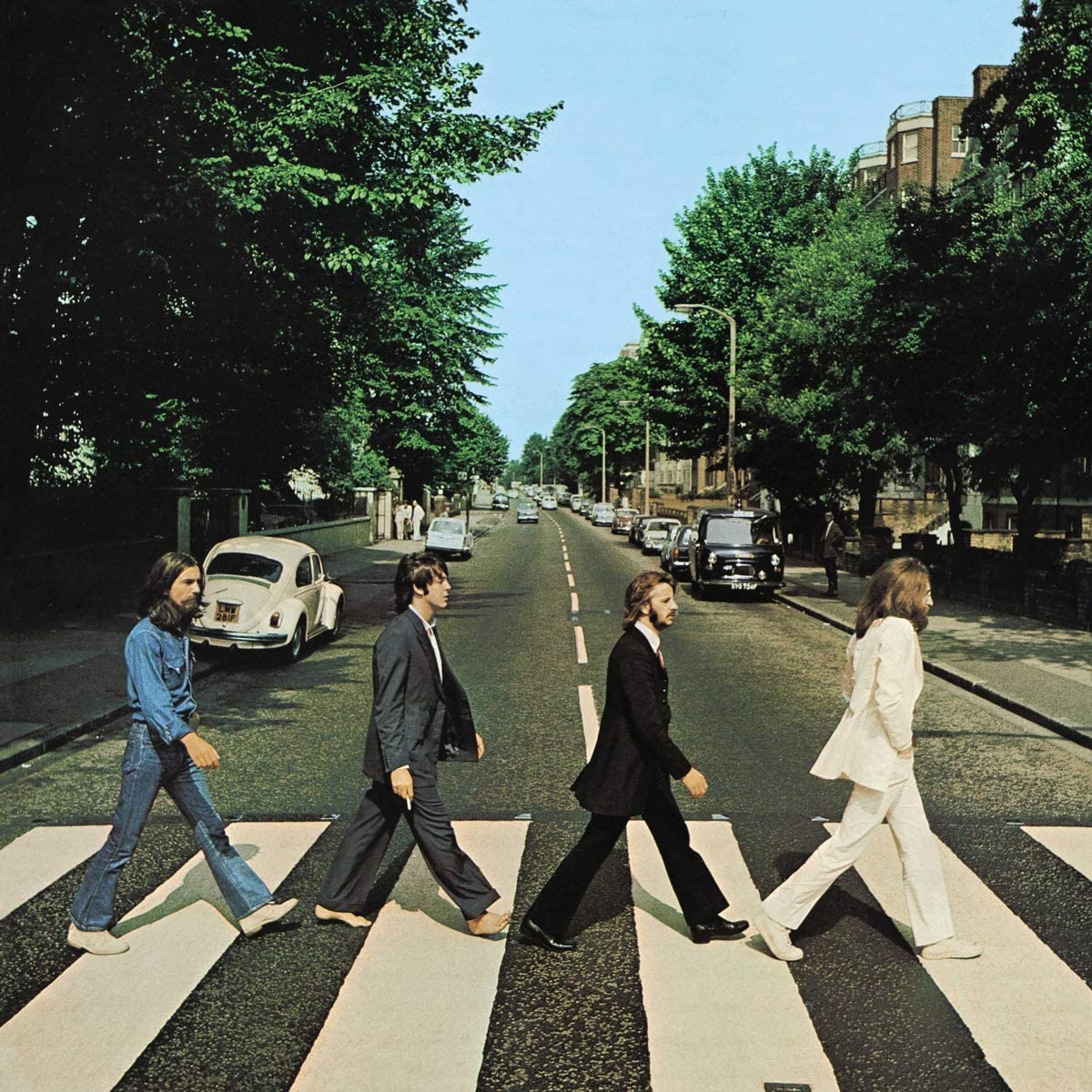
All of that stems from the fragmentary glory that is Side Two of 1969’s Abbey Road, the musical definition of a whole that is greater than a sum of its parts. It’s arguably the aural summit of The Beatles’ recorded work. However, the finale of the album almost called ‘Everest‘ was derided by John Lennon as unfinished songs all stuck together. Everybody praises the album so much, but none of the songs had anything to do with each other, no thread at all, only the fact that we stuck them together‘ (John Lennon Playboy interview with David Sheff, September 1980 (published January 1981)). Lennon’s criticism is harsh, but there is truth in it. While ‘Abbey Road Medley’ ( Side Two of Abbey Road is colloquially known as the ‘Abbey Road Medley’, however, the 2019 box-set reissue also refers to it as ‘The Long One’) is a delight, befitting the end of a decade and the band that defined it, there is an earlier near-perfect track sequence in The Beatles’ canon. 

Side Four of The White Album is often overlooked and even ignored as the ‘weird’ side; evidence that the 1968 thirty-track behemoth should’ve been a two-sided LP. But it might just be the best example of a song suite in popular music. Individually, ‘Revolution 1′, ‘Honey Pie’, ‘Savoy Truffle’, ‘Cry Baby Cry’, ‘Revolution 9’, ‘Good Night’  are unlikely to make anyone’s Friday night playlist. If you met someone at a party who said that any one of them was their favourite Beatles track you’d make your excuses and head to the bar.  

One might even go as far to say that not one of the tracks stands out on The White Album. The popular verdict: ‘Revolution 1’ is a less-exciting cousin to the raucous, electrifying B-Side to ‘Hey Jude’. ‘Honey Pie’ personifies (in name and substance) the sickly-sweet nadir of McCartney’s pastiche and ‘Savoy Truffle’ is another forgettable ‘Harrisong‘, meaninglessly listing the contents of a chocolate box and warning against the perils of tooth decay. ‘Cry Baby Cry’ is a glorified lullaby based on an advertisement, a continuation of post-Rubber Soul Lennon laziness, ‘Revolution 9’ is a mess of noise, a waste of vinyl space at 8 minutes, 22 seconds. Ending the album with  ‘Good Night’, a Ringo vocal is a bad move to say the least, exacerbated by Disney tremolo strings and saccharin lyrics.  

Side Four of The White Album, ‘You can count me out (in)’Right?

Wrong. 

A Doll’s House

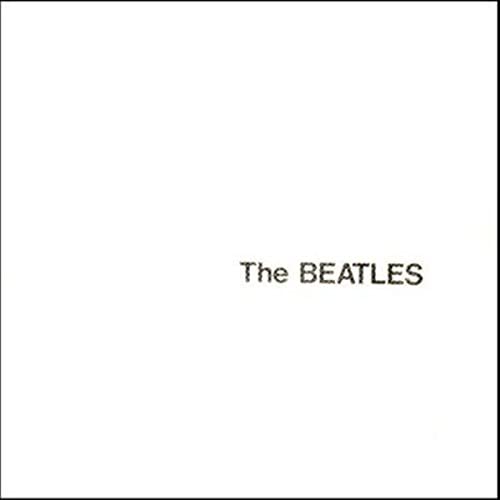
1968’s The Beatles (whilst this is the official album title, it quickly became known as The White Album for its minimalist cover) was almost called something very different . Had it not been for British psychedelic group Family’s debut LP Music In A Doll’s House released in July of the same year, the Beatles’ only double was slated to be ‘A Doll’s House‘.

Imagine that. A creepy Victorian miniature mansion with 30 rooms, one for each song. Each behind an auspicious door with which, upon opening, you might be met with anything from a dose of pastiche surf rock (‘Back In The USSR’), a game of self-referential Beatles Cluedo (‘Glass Onion’), a paean to mating primates with one of the most underrated rock vocals of all time (‘Why Don’t We Do It In The Road?’), a song about a sheepdog (‘Martha My Dear’), a blackbird (‘Blackbird’) or a Raccoon (‘Rocky Raccoon’), a dystopian warning à la Orwell (‘Piggies’), an anti-hunting anthem? (‘The Continuing Story Of Bungalow Bill’), a slagging off of Sir Walter Raleigh (‘I’m So Tired’), a slagging off of the Maharishi (‘Sexy Sadie’), a slagging off of ‘you all‘ and the invention of 1970s FM radio rock (‘While My Guitar Gently Weeps’), the world’s first heavy metal song (‘Helter Skelter’), a bassline played with the mouth (‘I Will’), a Psych/hard rock/gun magazine Doo Wop (‘Happiness Is A Warm Gun’), a song for anyone with a birthday this year (‘Birthday’), Ringo’s songwriting debut country groove (‘Don’t Pass Me By’), a cowbell maybe even too prominent for Christopher Walken in the Saturday Night Live sketch ‘More Cowbell’ which aired on 8th April 2000 (‘Everybody’s Got Something To Hide Except For Me And My Monkey’), a blues dirtier than a Woodstock puddle (‘Yer Blues’), potentially androgynous reggae (‘Ob-La-Di, Ob-La-Da’), an attempt to coax Mia Farrow’s sister from a hut (‘Dear Prudence’), the musical and spiritual meeting of the two great loves of John’s life (‘Julia’), an acidic glimpse of mantra madness (‘Wild Honey Pie’), pre-‘Country Dreamer’, country-dreamer-Paul (‘Mother Nature’s Son’) or drums so distant and heavy they sound like they could’ve been recorded in the Himalayas six months earlier, the sound only just reaching you now (‘Long, Long, Long’). 

After the pop side (Side One), the folk side (Side Two) and the rock side (Side Three), Side Four is ‘The Doll’s House Side‘.  It should be noted that what follows is not a proclamation that Side Four of The White Album is a predetermined concept or even, on a song by song basis, necessarily how The Beatles intended to convey meaning through its contents. However, it is an interesting way in which you can listen to it and, more importantly, it’s a lot of fun; a manual for a new way to try the songs you may have underestimated by the band you thought you definitely hadn’t.  

A childlike revolution

Revolution 1
Recording sessions for The White Album began in EMI Studio Two at Abbey Road on Thursday 30th May, 1968. Having recorded the extensive Esher Demos at George’s Surrey bungalow, Kinfauns, the boys had over forty songs from which to build the official follow-up LP to Sgt. Pepper (Magical Mystery Tour was only released as an EP in the UK. Interestingly, 1968 is the first instance since 1963’s Please Please Me where The Beatles had more material than was required to fill an album and the only time where all of that surplus was original material).  ‘Revolution’ was selected as the first of the new batch to be recorded and the work done on this day gives us two of the songs on Side Four of the eventual LP (Take 20 produced ‘Revolution 1’ and its extended outro provided the structure of ‘Revolution 9’). 

The White Album is inextricably linked with The Beatles’ pilgrimage to Rishikesh, beginning in February 1968. Although reference to the Indian experience justifies the acoustic timbre of a significant portion of the album, it is perhaps just as prudent to consider the album in the context of the year of its creation which, like 1967, is a year in which its music is difficult to separate from its events. 

By late ’67 it was becoming clear that the hippie utopia wouldn’t materialise on either side of the Atlantic. The Haight-Ashbury had descended into “ghastly drop-outs, bums and spotty youths, all out of their brains” (George Harrison’s comment on witnessing San Francisco in 1967, included in Derek Taylor’s memoir ‘As Time Goes By’ (1973)). US death tolls in Vietnam were at their highest in 1967-1968 at more than 28,000. On 17th March 1968, approximately 25,000 people gathered outside the US Embassy in London’s Grosvenor Square to protest the US involvement in Vietnam, resulting in riots. Dr. Martin Luther King Jr was assassinated on 4th April in Memphis and Robert Kennedy on 6th June – a week into The White Album sessions – in Los Angeles. 

It is, therefore, hard to ignore the notion that, in beginning work on their new album, The Beatles were following past practice and reacting to the world outside Abbey Road, setting ‘Revolution’ and its subject matter as The White Album‘s manifesto. 

Whether discovering The Beatles in real time or later you were likely already familiar with another version of the song; the distorted guitar and screams version which backed ‘Hey Jude’ as the first Beatles’ release on the Apple label (26th August 1968). ‘Revolution 1’ was, and to a degree still is, therefore, a surprise. It has broadly the same arrangement as the B-Side but is much slower, less electric and with an almost comical doo-wop backing.

Whereas the single version ‘Revolution’ embodies the idealised uprising from the perspective of its subscribers and participants (perhaps the Grosvenor Square crowds)  ‘Revolution 1’ is more like a middle-aged, bowler-hatted Londoner, let’s call him Harold, walking through those 1968 scenes. Passively passing through Ladbroke Grove, he is sympathetic to the cause but feels the need to point out why it is so easily undermined by those so inclined with the lines ‘if you go carrying pictures of Chairman Mao you ain’t gonna make it with anyone anyhow’ and ‘if you want money for people with minds that hate, all I can tell you is brother you’ll have to wait’.

The protagonist does not necessarily feel part of the ‘Establishment’, but his age lends itself more readily to the established order than to subversion of it. This generational gap creates an unbreakable apathy in the older generation, in which its flippant treatment of the younger generation and its dogmatic belief that to ‘change the world’ is an impossibility is acutely distilled in Lennon’s sarcastic vocal delivery: ‘we’re all doing what we can’.  

Honey Pie
‘Honey Pie’ is disadvantaged by its place in the The White Album track listing. Firstly, after three-and-a-bit sides of largely unusual music, a listener may be fatigued. Secondly, we’ve already heard ‘Wild Honey Pie’. That either means we’re intrigued by what a similarly-named song has to offer (not a great deal as it turns out) or, if you hated ‘Wild Honey Pie’, ‘Honey Pie’ is already tarred with the same brush. Thirdly, ‘Honey Pie’ naturally falls within the McCartney music hall catalogue of which this album already exhibits a superior representative in ‘Martha My Dear’. 

But maybe, just maybe, ‘Honey Pie’ isn’t a music hall pastiche. Harold arrives home. He’s off the streets of a crumbling London and into his sanctuary where, if he likes, nothing ever changes. He pours himself a cognac and places the gramophone needle on his favourite 78; the sound of the 1940s, his golden generation. He dreams of Hollywood and romance; the song’s heroine evokes the great loves of his youth before he settled down into a settled job and a settled life. ‘Honey Pie’ is an exploration of his delusional apathy and selective ignorance of the reality of things. In providing a stark contrast to the breakdown of the psychedelic generation’s attempts to change the world, it represents the very people best-placed to assist yet whose only act was to turn their backs and turn up their radios to drown-out the sound of a world about to erupt outside the four walls of their homes. 

Savoy Truffle
The compressed horns of ‘Savoy Truffle’ lay a fanfare foundation for the entry of the family’s children into the front parlour with their mother holding a new baby. They’re excited to see their father, home from another very important day in the very big city making the world go round. They’re clutching at boxes of chocolates and grinning from ear to ear. The Mackintosh’s ‘Good News’ varieties listed in the lyrics contrast with the bad news about to unfold outside. Shinily-wrapped in a tooth-decay warning, Harrison’s metaphor is dual-purpose for the loss of the innocence of childhood by adopting those ‘adult’ ideas of security, self-preservation and greed and, with it, the decay of progressive society. An arguable theme of the album is the notion that once such innocence is lost, it is irretrievable:  ‘You might not feel it now, but when the pain cuts through you’re going to know and how the sweat is going to fill your head, when it becomes too much you shout aloud’, sings George in a sentiment that goes beyond a mere call for a Clapton root canal (the genesis of the song was friend (and White Album contributor) Eric Clapton’s love of chocolates).

Cry Baby Cry
Father sings a lullaby to his family, cry baby cry, make your mother sigh’. The man of the house is happy to admire his family at a distance but without adopting direct responsibility; they are one of his marks on the world (‘the children of the King’) and it is enough, to him, that he graces them with his presence. His wife is ‘old enough to know better,’ supposing that age equals wisdom, a view that the songwriting is questioning here. The enemy to progress is the established order, the staid way of thinking, risk-averse sensibilities and the only burning desire, seemingly, a one to ‘grow up’. 

The characters in ‘Cry Baby Cry’ are obvious symbols of this established order. The Duke is ‘having problems with a message at the local bird and bee’. Perhaps he is physically barricaded in his local pub by active participants in the peaceful revolution. Perhaps the childlike suggestion of the ‘birds and the bees’ presents him as emotionally barricaded from showing his wife the love she deserves. She, the Duchess, seems to be elsewhere, maybe invited to the family home for tea after the children go to bed. ‘Cry Baby Cry’ is The Last Supper for the establishment while the revolution rages on the other side of the draped windows. 

The hidden track between ‘Cry Baby Cry’ and ‘Revolution 9’ harnesses the ethereality of the former, souring in its fading notes toward the apocalyptic feel of the latter. ‘Can you take me back where I came from?’ sings Paul with reverberant acoustic guitar accompaniment. The final verse of its parent track describes ‘a séance in the dark with voices put on specially by the children for a lark’. Is this, the child track, the voice of one of those children larking about? Or is it the voice of a ghost trapped in the Ouija board and summoned up during the séance? The repeated one-line lyric could be heard as a plea by the adults in the room to revert to the innocence and security of their own childhood, but they know too much and find themselves helpless. They are the dolls in a Doll’s House. 

Revolution 9
‘Revolution 9”s foray into musique concrète is the sound of the revolution itself. John Lennon has said as much: that the song is ‘an unconscious picture of what I actually think will happen when it happens; just like a drawing of a revolution’. The Lennon/Harrison collaboration is possibly better-described as a Lennon/Harrison/Ono collaboration, significantly influenced by an absent Beatle first-interested in avant garde experimentation and the use of tape loops, Paul. In any event, the supposedly random collection of sounds throws up some interesting ideas.

The ‘Number 9, Number 9’ refrain is not reminding us Paul is dead. It is the Doll’s House gramophone sticking; the party is almost over and the world outside is falling apart. ‘Revolution 9’ evokes the disconcertion of a semi-dream state, its split-screen narrative flicking between what is going on inside and outside of the Doll’s House. The introductory exchange between George Martin and Alistair Taylor apologising for not buying a bottle of claret, followed by the exclamation of ‘cheeky bitch’ makes the listener feel they’re eavesdropping on a middle-class conversation in the [pineapple] heart of Dinner Party Society. 

The crazed female laughter is the Duchess from the previous song, ‘always smiling and arriving late for tea’. The discussions of the ‘price of grain in Hertfordshire’ and ‘financial imbalance’ are the gentlemen discussing matters of a fiscal nature over a cigar while the baby cries in the corner for its mother’s attention. Outside, the prophecies of ‘Revolution 1’ are coming true with riots and gunshots and cries of “Right, Right”. George’s repeated ‘El Dorado’ is foreshadowing the fall of the empire around the Doll’s House next to his sombre double refrain ‘Who was to know?’ suggesting a tragic meaningless to all this violence. 

As the sound collage reaches its chanting climax, its most famous line, spoken by Yoko, ‘if you become naked’ is confirmation that the regression to a childlike state is the answer – the true revolution is not political, economic or violent but is to reject baseless ‘adult’ ideas. The dream isn’t over, it’s just a different dream to what we thought was the answer in 1967. 

Jonathan Gould wrote that ‘Revolution 9’ is ‘an embarrassment that stands like a black hole at the end of the White Album’. But it isn’t at the end of The White Album and the track that closes out the LP is far from a black hole. 

Good Night
No other song from the Esher Demos would be a more appropriate finale to this strange and wonderful cabinet of curiosities and, sometimes, there’s no other song in the world that I’d rather listen to than ‘Good Night’. The comfort of Ringo’s voice cascades from the record like a warmed blanket unfurling, inviting the listener to feel like a child being tucked-in for a sound night’s sleep by its singer. And that is why it’s perfect. None of the other Beatles could have sung it convincingly, yet Ringo is earnest. ‘Good Night’ is the foil to ‘Revolution 9’. In the same way that the gravity of Revolver‘s closer is tempered by its comic title, The White Album‘s final song sweeps away any pretension left hanging after ‘Revolution 9’, yet simultaneously progresses the apparent theme of Side Four, resolving it in the only way The Beatles knew how, with positivity. Within the safety of the child mind, the regression from the chaos of the adult world is complete and maybe it is ‘gonna be alright’. 

Take this, may it serve you well
The resurgence in popularity of the vinyl record is encouraging for the preservation of the ‘album’ as an art form. If artists are to write and record successful ‘albums’, attention must be paid to track sequencing and how a side of vinyl flows, develops, balances light and shade, maintains interest and leaves a lasting impression. Whereas Side Two of Abbey Road is a masterclass in sonic knitting, Side Four of The White Album is a thematic opera: A Doll’s House. If you’re striving for a new way to listen to The Beatles, I invite you to revisit Side Four and see what you think it’s all about. After all, it’s all in the mind you know.

Written by Jordan Frazer. Follow him on Twitter at @TheStylusMethod and find out more about the band at Bandcamp
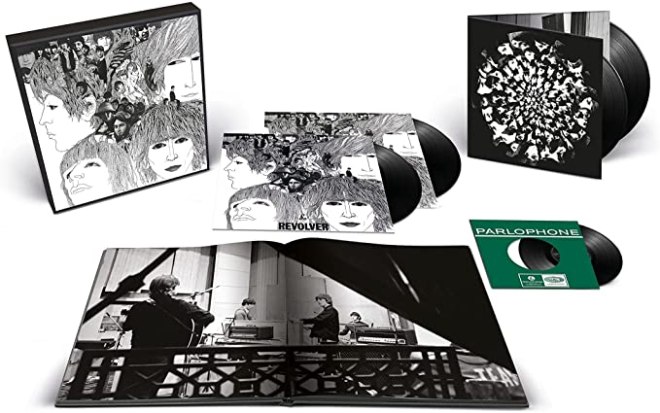
Review: Revolver Super Deluxe Vinyl Box Set

Revolver super deluxe vinyl
I [pretentious cough] ‘discovered’ The Beatles in the mid-2000s, aged 13. I began like so many others with the Red and Blue albums, but where to go next? Back then the adage that Sgt. Pepper’s Lonely Hearts Club Band was the greatest thing ever committed to record had largely eroded and been replaced by men-of-a-certain-age advocating for Revolver as the true rock masterpiece, so that’s where I headed.

Revolver. What is that? A pun? I spent hours staring at the artwork. Why are the boys out of order? (Paul, John, Ringo and George) Why are three of them looking away? Why, in a technicolour age is Klaus Voorman’s cover design in monochrome? And then there’s the tracklisting; the song titles are weird. Why doesn’t ‘Love You To’ make grammatical sense? Who is ‘Dr Robert’? What else, besides sing, can your bird do? What on earth (or any other planet) does ‘Tomorrow Never Knows’ mean? What, exactly, has Paul got to get into his life? George has three songs on this one; what the bloody hell? Is it even George on the back cover or is it three Beatles and Keith Richards? I hadn’t yet pressed play on the first track and already my little head was filled with things to say. A portable disc player and some over the ear headphones. I was alone, I took a ride, I didn’t know what I would find there.

What I found when I pressed play was finger snaps, tape loops, wild horns, backwards melodies, searing harmonies, drones, twin-lead guitars, clavichords, changing time signatures, fade-ins and fade-outs. I found the gruff nonchalance of the ‘Taxman’ count-in and the disconcerting semitone piano riff in ‘I Want To Tell You’. The delicate beauty of ‘Here, There And Everywhere’, the thunderous trance monotony of the ‘Tomorrow Never Knows’ rhythm section and the austere greyness of ‘Eleanor Rigby’. When the most perfect five-second guitar break in ‘Got To Get You Into My Life’ bursts the black and white bubble and lets the colour in, it’s like Bobby Moore lifting the Jules Rimet trophy.

Revolver is the most eclectic Beatles album. It’s the most ambitious and it’s the most fun. Not once is an idea repeated and, listening in order, you can hear the expansion of 20th Century popular music with every note, inspiring future artists across genres to pick up guitars, sit at pianos and evoke the sound of the Dalai Lama chanting on a mountain-top. Well, maybe.

But this article is not about Revolver, the album. It’s about Revolver, the 2022 Super Deluxe Box-Set, for which my adoring family handed over the £189.99 (plus delivery) for my 29th birthday present. Vinyl is my chosen medium these days and the excitement of holding in my hands the ‘new’ version of the album I’d loved for 16 years was palpable.

The New Stereo Mix
Despite the temptation to skip ahead to the studio outtakes, I behaved myself. The changes here are slight but fantastic. This is not a dusting-off or a face-lift. This is more like a leg-up over the wall into the chocolate factory, a gentle nudge into the 21st Century for something that will live forever. With the exception of ‘She Said She Said’ (on which the rhythm guitar on the left channel is a little intrusive), the new stereo mixes are invariably better than the 2009 re-masters.

This is a crisper, punchier sound. It’s more metallic in just the right places, like Paul’s raga-inflected solo in ‘Taxman’ and John’s acoustic strums in ‘I’m Only Sleeping’. It’s also warmer in others, like George’s lush harmonies, Ringo’s fills in ‘Here There And Everywhere’ and the sound effects in ‘Yellow Submarine’, transporting you to Studio No.2 with bathtubs and chains, Mal Evans’ hosepipe, Brian Jones clinking glassware and George Martin wearing brass instruments for hats. You can hear the fun that was had; how amazing that sound can convey that.

For a collection of songs so familiar to its listeners, there are things you’d maybe never noticed before. In at least two places, John and Paul sing ‘Bob Robert’ rather than ‘Dr Robert’ and Ringo does indeed play on ‘For No One’! The final chorus on ‘Good Day Sunshine’ is more pronounced before its fade-out and Paul’s yawn in the middle of ‘I’m Only Sleeping’ sounds like he’s waking-up right next to you. ‘Love You To’ sounds more authentically Indian than ever and for the first time becomes one of the stand-out tracks on the album.

Maybe it’s because of the sequencing or simply because Side One is so strong, but it always felt like the section after ‘Good Day Sunshine’ and before ‘Got To Get You Into My Life’ was overlooked. This is where the 2022 stereo mixes shine. The guitar work in ‘And Your Bird Can Sing’, the vocal agility and sympathetic percussion in ‘For No One’, the whirring guitars and Paul’s harmony line on ‘he’s a man, you must believe’ in ‘Dr Robert’ and the interplay between George’s guitar riff and Ringo’s drums in ‘I Want To Tell You’ are the highlights of the new stereo mixes.

Sessions
Even the Beatles fanatics among us who aren’t in constant search of bootlegs have heard some of this material before on Anthology 2 including take 1 of ‘Tomorrow Never Knows’, the hornless version of ‘Got To Get You Into My Life’, the how-many-words-can-we-get-into-the-backing-vocal version of ‘Taxman’ and the high-as-kites giggling breakdown of ‘And Your Bird Can Sing’, perhaps more appropriately titled ‘And Your Byrds Can Sing’. It’s the material we haven’t heard before that brings the magic to this collection and there’s a lot to pore over on these four sides.

Rain Take 5 – Actual speed
The song that invented Oasis was recorded in A and then slowed down to G. That version is impressive enough; Ringo’s finest moment on record with a drum part so unusual and busy that it gives the impression it might fall apart at any time, the rest of the song crumbling around it. Paul’s rumbling bass threatens to toss the needle out of its groove. But it’s even more jaw-dropping when you hear the rhythm track at its original speed. An oft-advanced criticism of these previously-unreleased studio tapes is that seeing behind the curtain ruins the illusion. This recording is that most rare example of learning more of how something was created posing further questions and a greater sense of awe. How did they play it at this speed and keep it so tight? Has a band ever sounded that good again?

Got To Get You Into My Life (First version) – Take 8
Paul is the most musically-gifted Beatle and, at the time of recording Revolver, the hippest and most adventurous of the four. It’s rather funny, therefore, to hear his apparent confusion at the idea to fade-in the organ:

Paul: ‘I don’t see how you’ll get any different sound from that’ [hits opening chord]
John: ‘You’ll get the organ but without the start of it’
Paul: ‘Why though?’ (See the photograph of Paul on page 6 of the accompanying book as a perfect companion piece to this quote).

Whether we’d admit it or not, we all want to be in The Beatles’ inner circle and, post-Get Back, these studio chatter clips make you feel like you’re in the room. Imagine that.

Yellow Submarine (Songwriting Work Tapes)
‘Yellow Submarine’ is relentlessly relied on by bores, music snobs and other Blue Meanies as hard evidence that (a) The Beatles are overrated and (b) Ringo is crap. Fortunately, I no longer feel the need to challenge such opinions. Is it musically complex? No, but we have ‘Here, There And Everywhere’ for that. Does it have the best vocal? No, but we have ‘I’m Only Sleeping’ for that. Does it challenge us as listeners? Well, now you mention it…

In Paul’s foreword he writes ‘…one twilight evening, lying in bed before dozing off, I came up with a song that I thought would suit Ringo and at the same time incorporate the heady vibes of the time, ‘Yellow Submarine”. This was certainly my understanding of its genesis. Children’s song. Written by Paul. Sung by Ringo.
However, this seems at odds with the two ‘Songwriting work tape’ versions of the song on side four of the Sessions discs. ‘In the place where I was born, no one cared, no one cared’ sings John, on a recording reminiscent of the earliest versions of ‘Strawberry Fields Forever’. A John song after all? What is perhaps more interesting is the following track. John sings the revised lyrics, beginning ‘In the town where I was born lived a man who sailed to sea’ after Paul’s encouragement that ‘…you know how to sing it’.

It’s impossible not to see these lines as a description of Alf Lennon. If that’s correct, then this is John at Plastic Ono Band levels of vulnerability and very far from the eventual Goons-like feel of the released version. That is not, of course, to say that Paul (and yes, okay, Donovan who contributed the lines ‘sky of blue, sea of green’ to the final version of the lyrics) didn’t write some, or even most of the remaining lyrics, but this is truly a revelation which challenges one little piece of the accepted narrative of ‘The Beatles’.

Tomorrow Never Knows – Take 1 & I Want To Tell You – Speech & Take 4
The album’s psychedelic closer was a turning point for a band for whom every album presented a turning point. If given its original name, ‘The Void’, it would be all too much. Tempered by the Ringo malapropism title and now also by John’s music-hall ‘da da da’ ending (which was left off the Anthology 2 version), we’re reminded that at almost no time ever did The Beatles take themselves seriously, and neither should we.

Similarly, a comedy highlight of the Sessions is John’s suggestion that George’s as-yet-untitled ‘I Want To Tell You’ should be named ‘Granny Smith part friggin’ two’. A reference to the working title of ‘Love You To’ being ‘Granny Smith’, this self-referential Beatle humour is just what we were hoping for. The actual working title for this song ended up as ‘Laxton’s Superb’.

Eleanor Rigby Speech before Take 2
This fragment reflects so much of what the band and their story is all about. On the studio floor, professional classically-trained musicians with cut-glass accents discuss the virtues (or otherwise) of using vibrato on the string quartet accompaniment to ‘Eleanor Rigby’ while the learned-RP voice of George Martin acts as translator. Up above them, by about 20 stairs, paying half-attention is the not quite 24-year old working class creator, James Paul McCartney. Could he tell a difference between the two takes? ‘Err, not much’. The student becoming the master.

This is a reminder of two things – first, that the creative boom of the 1960s relied on a disruption of the class system in Britain. Second, that The Beatles needed and welcomed collaborators, the most essential of whom was George Martin.

The Other Bits
The Super Deluxe box also includes:
an LP of the original mono master, still sounding glorious on 12-inch vinyl and a good comparator for the new stereo mixes; a ‘Paperback Writer’ c/w ‘Rain’ EP, reminding us of just how fierce that guitar tone was, featuring, on Side A, the new 2022 stereo mixes and, on Side B, the original mono mixes, in replica Parlophone packaging complete with ‘Emitex’ advertisement; and a 100-page book with a foreword by Paul and contributions from Giles Martin, Questlove and Kevin Howlett as well as a track-by-track exploration of the album, a comic strip from Klaus Voorman and some contextual commentary on the album’s release and  musical/cultural significance all embossed with a subtle extension of the album cover’s tentacle-like moptops.

The Book
Paul plays things down in the foreword, referring to Revolver as ‘All in all, not a bad album’. Classic Paul. Giles Martin’s thank you note to his father, The Beatles and their listeners is genuine and heartfelt and the track-by-track analysis (including images of original lyric fragments and annotated tape boxes) is a lovely world in which to escape for a while. Questlove’s ‘Evolver’ piece perhaps focusses a little too much on other albums, but the sentiment is just right and the discussion of the enduring quality of Revolver and its reception by and influence on a black audience is excellent. Klaus Voorman’s comic strip on the creation of the artwork is childlike and endearing, albeit unusual, and includes a particularly enjoyable likeness of Brian Epstein.

But, like so many Beatle things, the best bit about the book might just be the photographs. Particularly good examples are: a working studio band with George on bass (pgs. 20-21), Paul listening to the competition (pg.33), sunglasses indoors (pg.34), the sartorial elegance (pgs.78-79) and the instruments which created it all, including a rare mid-sixties shot of a Beatles’ Fender Stratocaster (pg.100).

A Collection Of Oldies?
Box sets are collectors’ items; how often do you listen to studio outtakes in place of the real thing? They are a completist’s luxury, and I’m okay with that. Since the novelty of the Sgt. Pepper box in 2017 and the expanse of the White Album box in 2018, heavy scrutiny is now inevitable of these expensive annual offerings. But, what are we really looking for? I propose that we Beatlemaniacs have started to take The Beatles for granted.

Until recently, the received wisdom was that we’d never get anything earlier than Sgt. Pepper because of the way those albums were recorded. Yet, thanks to the legacy of Get Back and Peter Jackson’s ‘de-mixing’, here’s the one we were craving (with rumours of Rubber Soul as the next to receive the archive treatment). Not many albums could credibly live up to Giles Martin’s observation that ‘Music doesn’t get old; we just get old around it’ (Revolver Book – Introduction pg.9) and it’s fitting that a record which still sounds so fresh after 56 years can be enhanced for modern listening by the most cutting-edge of technologies. We can all now finally listen to Revolver on stereo headphones which means the sound of Summer ’66 can un-grey your daily commute or provide a soundtrack to your martini-sipping on a St. Tropez sun lounger.

In this chapter of the greatest story ever told, full to the brim with chance meetings, happy accidents and making-it-up-as-they-went-along, sometimes it’s the things that didn’t happen that matter most. Revolver could’ve been recorded at Stax Studios in Memphis (The Beatles’ soul record). It could’ve been called After-Geography or Abracadabra or Beatles On Safari. But it had to be recorded at Abbey Road. It needed the quintessential Englishness of men in white lab coats running around while four crazy twenty-somethings invented, created, pushed the boundaries and changed the world. Where Rubber Soul was all log fires, corduroy and incense, a stylus-crackle adding to the ambience, Revolver is tin foil, strobe lighting and mercurial intensity, demanding of the highest quality audio reproduction, which this box-set offers.

It will be forever the sound of Swinging London, England’s World Cup Win and the glistening water-mark for rock albums to come. But it is also a reminder that creative projects should be just that, creative, not conforming to an expected structure or genre-profile. Popular music has lost that edge now. Again quoting Giles Martin, ‘if you get tired of listening to Revolver, you get tired of life’. I’d urge all musicians and artists of any ability, age and discipline, use this reissue to escape, by all means, but do not view it as an historical record of something which cannot happen again. Use it as inspiration. Create.

It’s pricey, it’s extravagant, it takes up shelf-space you could fill with something more practical and no, it doesn’t have anything majorly unexpected or shocking to anyone who isn’t a seasoned Beatlemaniac. So, should you buy it? Think of it this way: this is not just Revolver, probably the best album The Beatles ever made (ask me again tomorrow and I might give you a different answer), it’s 2 hours, 42 minutes of Revolver and how could anyone not want that?

Review written by Jordan Frazer

The Beatles Handbook rating: 5 stars
Buy this album: Revolver 

The Beatles Albums Ranked

1 Revolver

Revolver

Most songwriters would give their right arm for just one of the melodies, riffs or chord sequences on Revolver. The playing is terrific too. From the looping bass, taut guitar stabs and crisp drumming of the opening ‘Taxman’, to the hallucinatory ‘Tomorrow Never Knows’ with that legendary, defining Ringo drum pattern, The Beatles sound like the tightest band on the planet.  And they don’t just hit the back of the net with rock, pop and psychedelia; whatever they turn their hand to on the album is pure gold, from the heart-breaking pathos of ‘Eleanor Rigby’ with its haunting double string quartet arrangement, to the achingly tender ‘Here, There and Everywhere’, arguably McCartney’s most beautiful love song. With every track a banger (and no, I’m not excluding ‘Yellow Submarine’ which has the hookiest chorus ever written), it’s unquestionably the highpoint of The Beatles recording career. An awe-inspiring achievement, especially when you consider it was released only eight months after Rubber Soul and that many of the tracks wouldn’t even make a top 20 of The Beatles best known songs.

Beatles Handbook rating: 5 Stars

Essential tracks
Eleanor Rigby
Here, There and Everywhere
And Your Bird Can Sing
Got To Get You Into My Life
Tomorrow Never Knows

Buy this album: Revolver

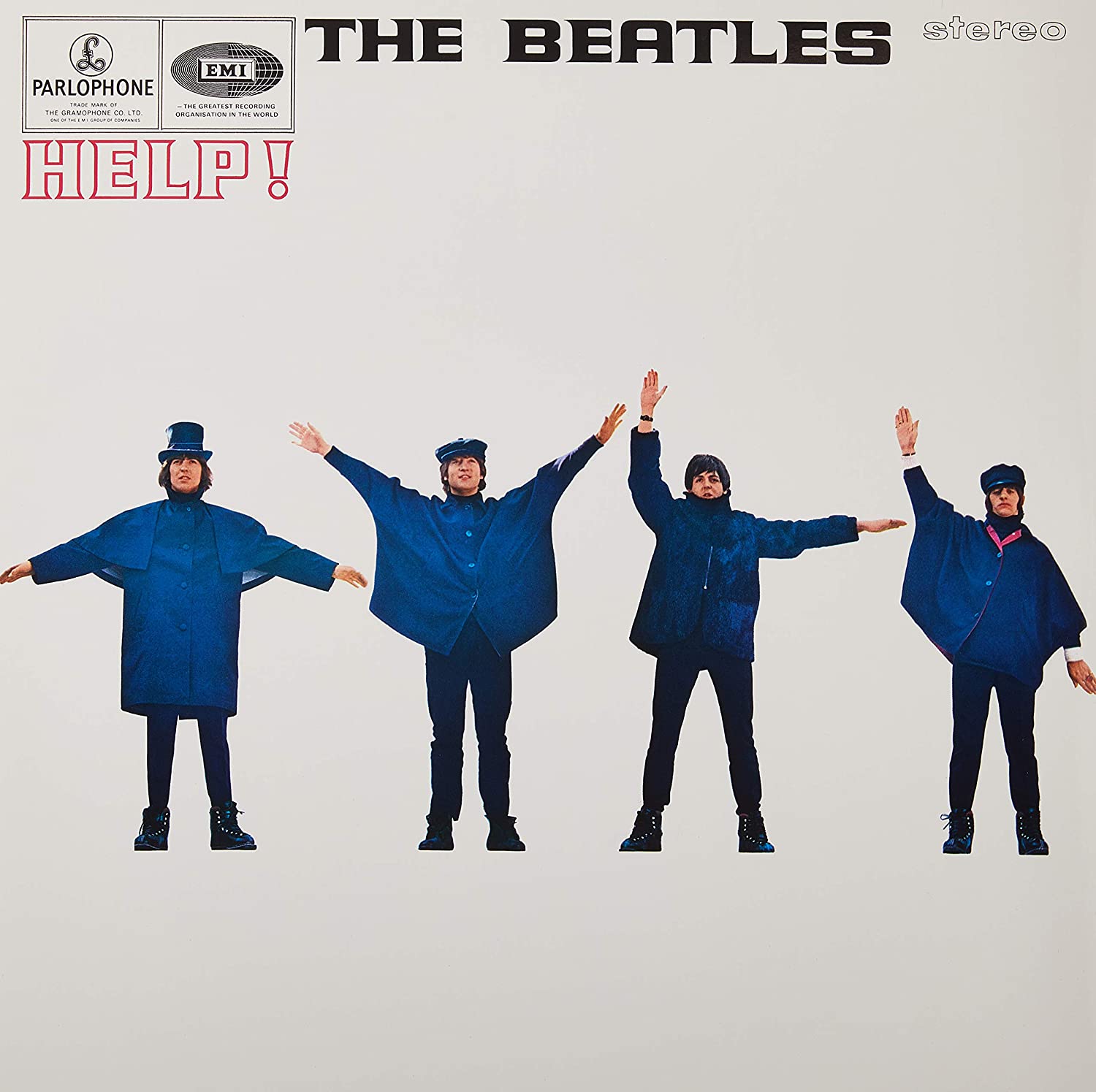
2 Help!

Help

For any other band, Help! would be a greatest hits album. But because this is The Beatles, it’s just another shift in the mop tops’ factory of greatness. With what must be the most impactful beginning of any pop album, ‘Help!’ makes for a direct, startling opening statement, vulnerable and yet uplifting as though by simply making the request, Lennon has made himself feel better. With only one track tipping the three minute mark (Ticket To Ride at a hardly epic 3m9s), the band rattle though 14 perfect slices of guitar pop.  Every track is a cracker, including the Ringo-sung ‘Act Naturally’.  As astonishingly excellent as the film it soundtracks is appallingly bad. 

Beatles Handbook rating: 5 Stars

Essential tracks
Help!
The Night Before
You’ve Got to Hide Your Love Away
You’re Going to Lose That Girl
Ticket To Ride

Buy this album: Help!

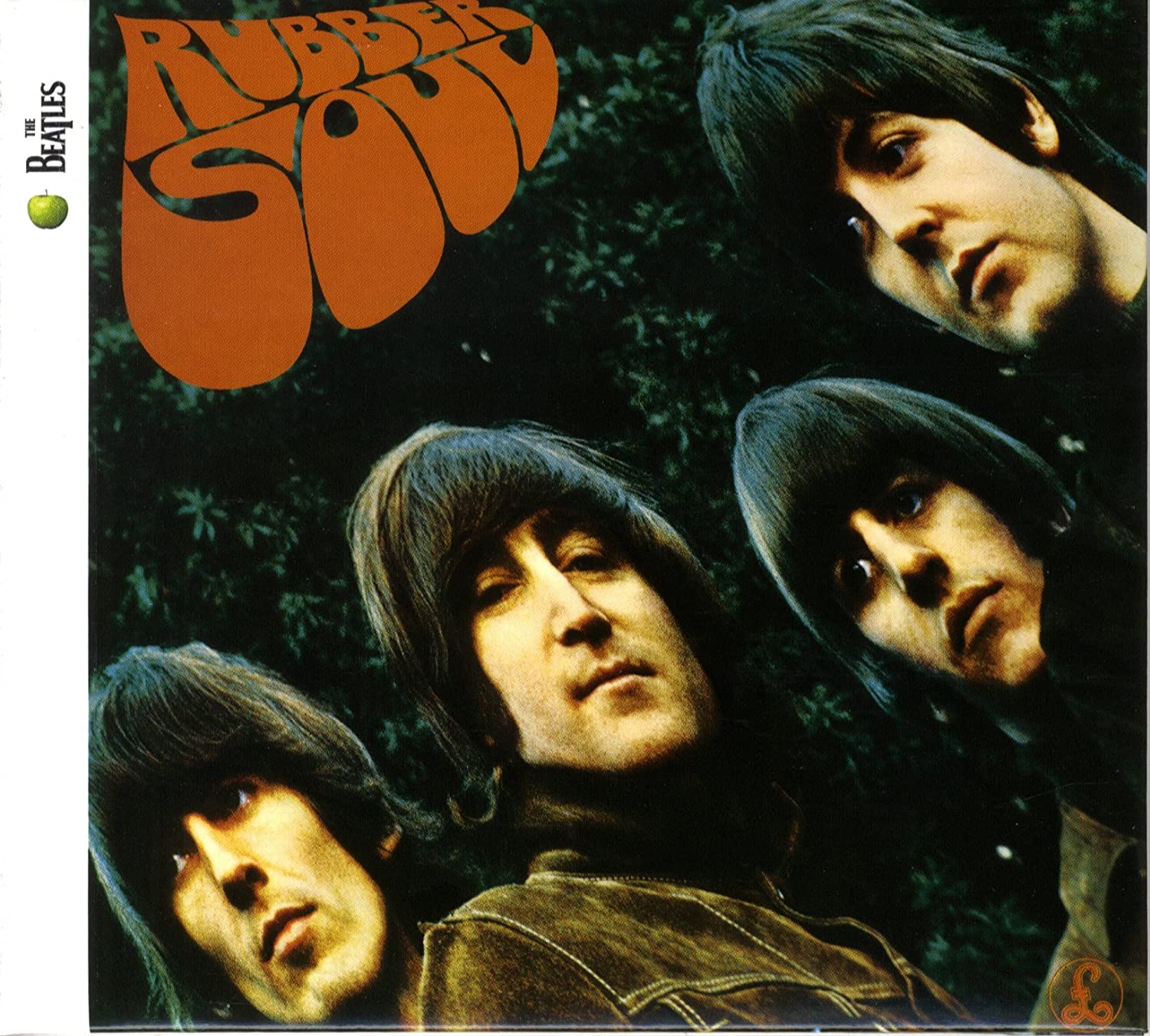
3 Rubber Soul

Rubber Soul
It’s amazing what you can do with some tight guitar riffs, even tighter vocal harmonies, passing piano chords and a killer hook line. ‘Beep, beep, beep, yeah’ indeed. It’s incredible to think that, a little more than two years earlier, the same four lads were banging, thrashing and crooning their way through a disparate rag bag of rudimentary rockers and schmaltzy ballads. And ‘Drive My Car’ is just one of any number of sophisticated, mature, memorable and melodic songs on what isn’t even their best album. It may be a music mag all-time-best-list staple but it can’t quite keep pace in terms of quality with Help!  or Revolver, but make no mistake, this is a band close to the very height of their powers sounding both assured, thrilling and moving by turns.

Beatles Handbook rating: 4 Stars

Essential tracks
Drive My Car
Norwegian Wood
Nowhere Man
The Word
Girl
I’m Looking Through You
In My Life

Buy this album: Rubber Soul

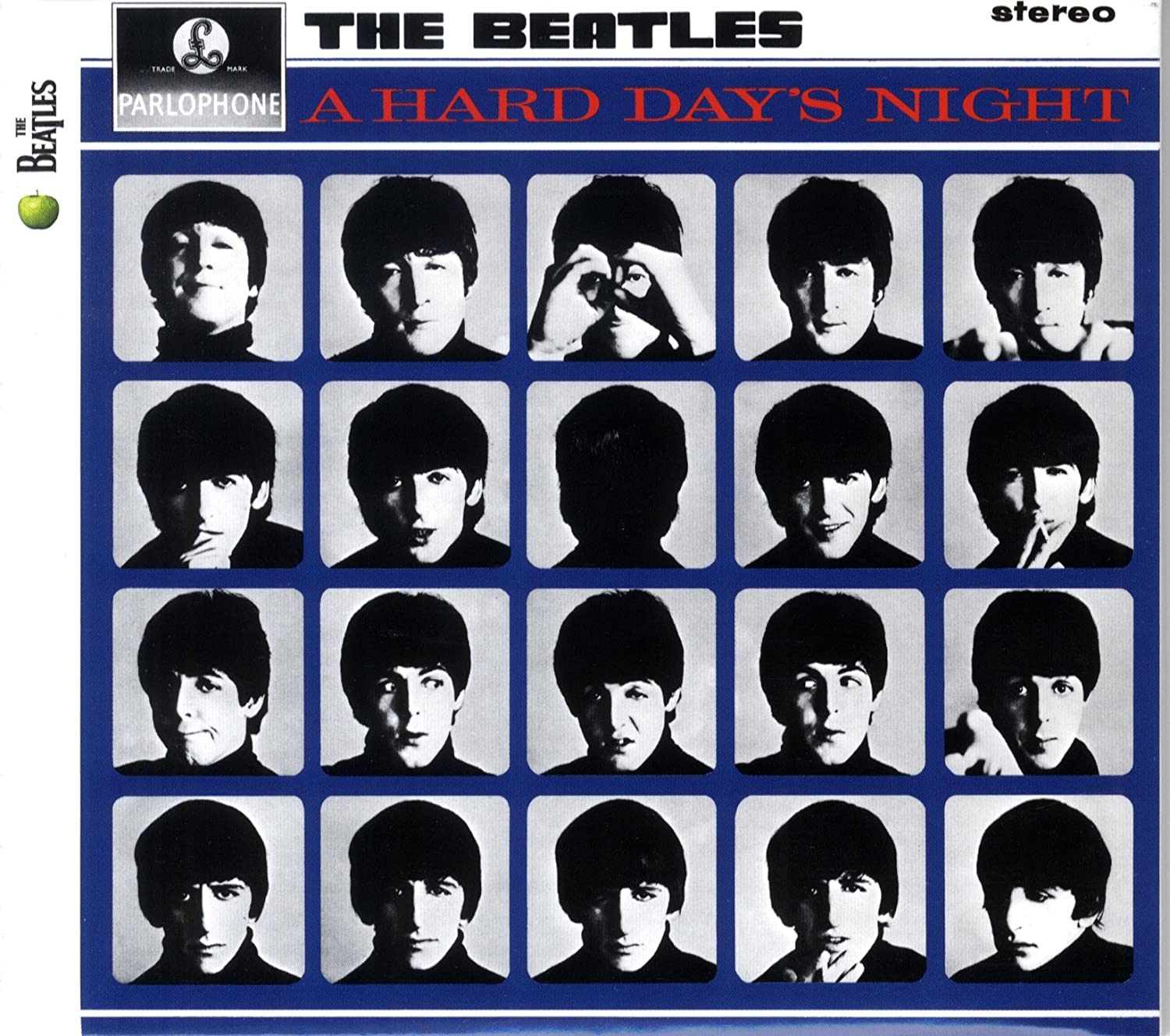
4 A Hard Day’s Night

Hard Days Night
As Luke Haines recently noted in his column in Record Collector, “the opening chord of ‘A Hard Day’s Night’… singlehandedly seemed to usher in a new era”.  It certainly ushered in a new era for the mop tops themselves with what might be considered by contemporary listeners as their first ‘proper’ album. Most of the Hamburg hard edges have been sanded off and chugging rock’n’roll for the most part replaced by sophisticated song writing with ace melodies and harmonies. Lennon dominates, taking lead vocals on nine out of the thirteen tracks and, according to beatlesarchive.net, writing ten, but McCartney still manages to make a big impression with his three contributions; the hauntingly beautiful ‘And I Love Her’ (the signature opening guitar motive courtesy of Harrison),  the instantly catchy ‘Things We Said Today’ and of course the timeless classic ‘Can’t Buy Me Love’.  Harrison is given ‘I’m Happy Just To Dance With You’ to sing, one of the weaker numbers that wouldn’t have been out of place on Please Please Me or With The Beatles but it’s still a pleasant enough sub-two minute listen. A great album that soundtracks the band’s finest moment on film.

Beatles Handbook rating: 4 Stars

Essential tracks

A Hard Day’s Night
I should Have Known Better
If I Fell
And I Love Her
Can’t Buy Me Love
Things We Said Today
I’ll Be Back

Buy this album:  Hard Day’s Night 

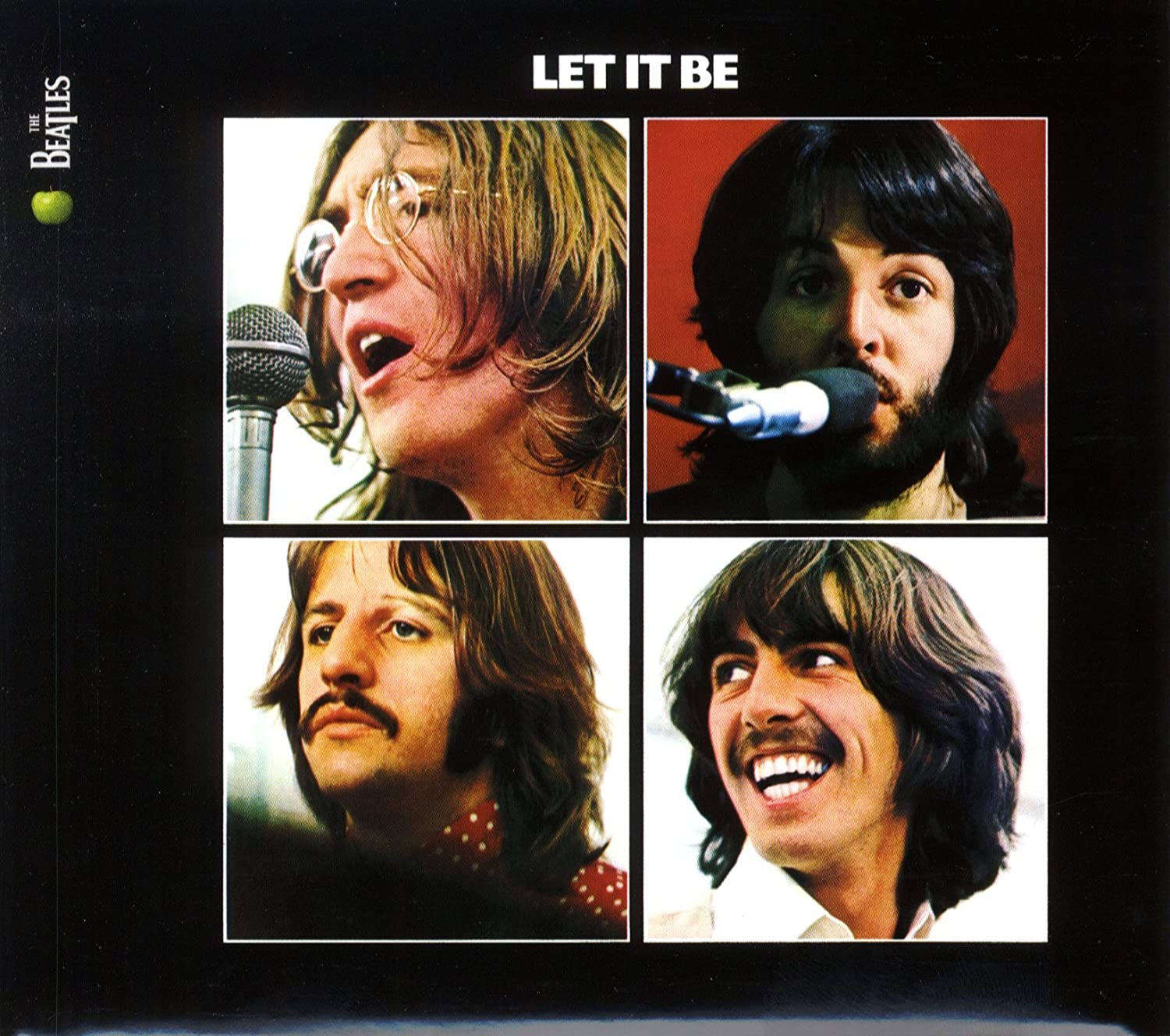
5 Let It Be

Let It Be

An album that includes songs of the quality of ‘Across The Universe’, ‘Let It Be’, ‘The Long and Winding Road’ and ‘Get Back’ should rate five stars, but it’s actually somewhat of a disappointment.  The inclusion of two sub-one minute tracks (‘Dig It’ and ‘Maggie Mae’), a piece of Lennon juvenilia in the form of ‘One After 909’, and Harrison’s lightweight ‘For You Blue’ gives Let It Be an uneven quality. That’s exacerbated but the inclusion of second division songs (at least in the context of The Beatles catalogue) ‘Dig a Pony’ and ‘I’ve Got a Feeling’, but it’s hardly surprising once you’ve seen the film Get Back and understand the chaotic nature of the rehearsal and recording sessions for the album. McCartney’s touching and wistful ‘Two of Us’ and Harrison’s waltzing ‘I Me Mine’ are the album’s two relatively hidden gems.    

Beatles Handbook rating: 3 stars

Essential tracks
Two of Us
Across The Universe
I Me Mine
Let It Be
The Long and Winding Road
Get Back

Buy this album: Let It Be

6 The Beatles (White Album)

The Beatles White Album
Where to start with The Beatles by The Beatles? An album that sounds like an extended re-issue of itself with bonus tracks that should never have seen the light of day (WTAF is Wild Honey Pie?). Starting at the beginning is actually a very good idea as you get to hear ace rocker ‘Back In The U.S.S.R’., the dreamy psychedelia of ‘Dear Prudence’ and the archly self-referential ‘Glass Onion’. Then the problems start. Oh bloody hell, it’s ‘Ob-La-Di, Ob-La-Da’, McCartney at his absolute worst, culturally appropriating a story that’s not his to tell over a weird and horrible umpah-meets-cod-reggae backing track. Jesus wept. At least the aforementioned ‘Wild Honey Pie’, the next track up, with its faux avant garde stylings has the decency to last a merciful 53 seconds.

I’m not going parse all 30 tracks of this sprawling mess, but suffice to say that to get to every magnificent song such as Harrison’s ‘While My Guitar Gently Weeps’, Lennon’s ‘Julia’  or McCartney’s ‘Blackbird’ you have to wade through dreck like ‘The Continuing Story of Bungalow Bill’ or the more than eight unlistenable minutes of ‘Revolution 9’ (if anyone tries to tell you that, actually, that’s their favourite Beatles song, run). It is however almost worth the slog to end up at one of the loveliest songs the band ever recorded, ‘Good Night’, affectingly sung by Ringo.

Beatles Handbook rating: 3 stars 

Essential tracks
Back In The USSR
Dear Prudence
While My Guitar Gently Weeps
Happiness Is A Warm Gun
Martha My Dear
Helter Skelter
Julia
Mother Nature’s Son
Everybody’s Got Something to Hide
Revolution 1
Cry Baby Cry
Good Night

Buy this album: The Beatles

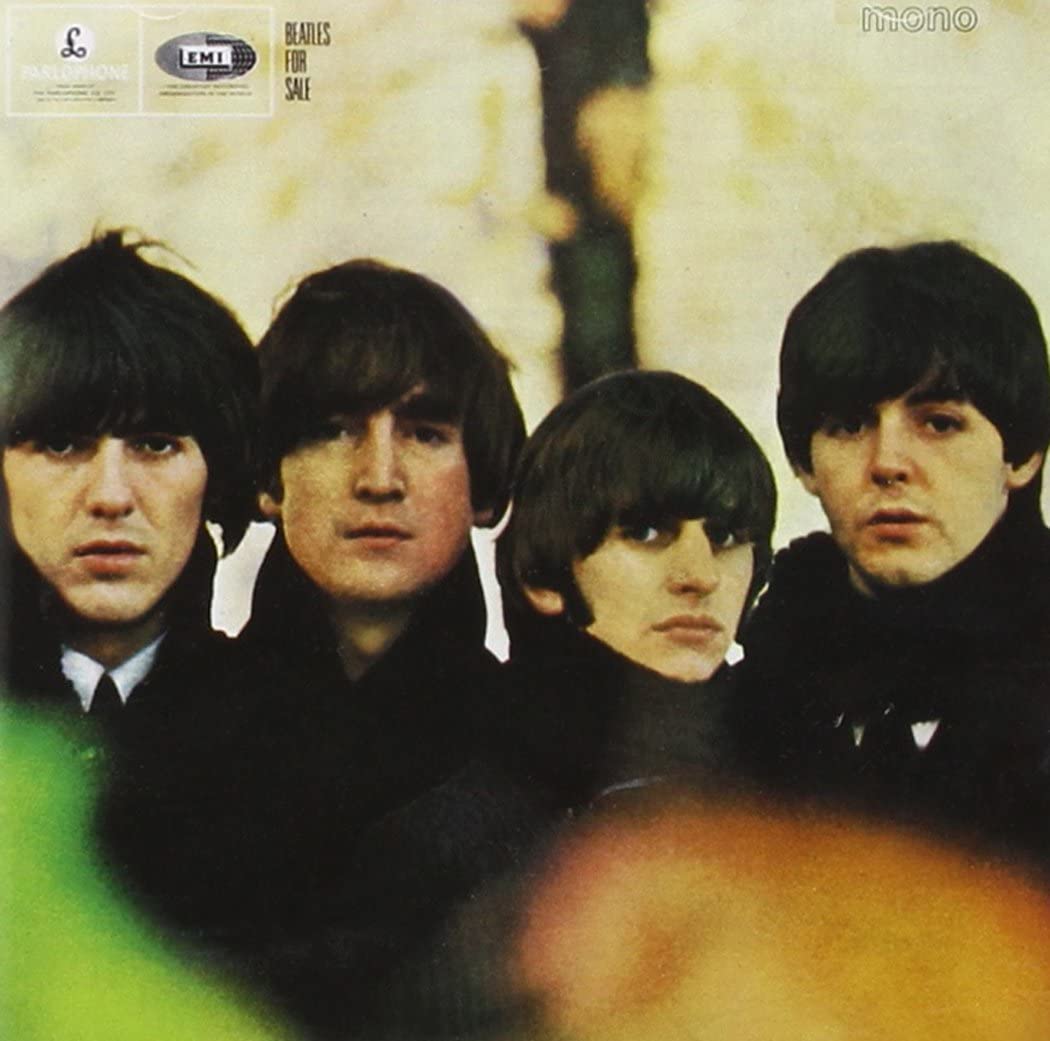
7 Beatles For Sale

Beatles For Sale
Sorry, I’m not buying. Compared to the giant leap forward that was A Hard Day’s Night, Beatles For Sale is a big step back. But let’s be fair; it was released just 21 weeks after Hard Day and was the fabs fourth album in two years. No wonder they resorted to padding out the 33 minute running time with no less than six cover versions. We are sadly back in Hamburg it seems, but at least Chuck Berry’s ‘Rock’n’Roll’ and Leiber/Stoller/Penniman’s ‘Kansas City’ sound convincingly raucous. The less said about Ringo’s rather painful stab at Carl Perkins’ ‘Honey Don’t’ the better.  Of the originals, ‘Eight Days a Week’ is the obvious stand out but the nakedly vulnerable, confessional lyrics of ‘I’m A Loser’ are striking, ‘Every Little Thing’ is a beautifully constructed pop song full of hooks, and Harrison’s twelve string riff gives ‘What You’re Doing’ a distinctive sound that would be much copied by the likes of The Byrds.

Beatles Handbook rating: 3 stars

Essential tracks
No Reply
I’m A Loser
I’ll Follow The Sun
Eight Days a Week
Every Little Thing
What You’re Doing

Buy this album: Beatles for Sale


8 Abbey Road

Abbey Road

The band’s final recordings (although penultimate release; Let It Be appeared eight months later) are sadly a rather scrappy affair. Harrison comes out on top with two stone cold, all time classics in ‘Something’ and ‘Here Comes The Sun’, not only the best songs on the album, but among the best he ever wrote and among the best of the entire Beatles catalogue. Lennon’s strident ‘Come Together’ makes an ear-grabbingly effective opener, especially with Ringo’s rolling drum pattern, one of the most famous in pop history. 

Beyond that, things get rather messy. Apart from inventing three chord punk nearly a decade before the Sex Pistols with ‘Polythene Pam’, there is McCartney’s music hall fetish in the form of ‘Maxwell’s Silver Hammer’, the white man’s doo-wop of ‘Oh! Darling’ and whatever the hell ‘Octopus’s Garden’ is meant to be to contend with. Not to mention a patience-testing 7 minutes 47 seconds of ‘I Want You (She’s So Heavy)’, although the extended instrumental outro is pretty mesmerising. 

There are some stunning moments scattered around, ‘Sun King’ is a rather lovely thing, reminiscent of Fleetwood Mac’s ‘Albatross’, and there are some great melodies on ‘You Never Give Me Your Money’ and ‘Golden Slumbers’, but ultimately the album fails to cohere in the same way as Revolver or Help!.

Beatles Handbook rating: 3 Stars

Essential tracks
Something
Here Comes The Sun
Sun King 
You Never Give Me Your Money
Golden Slumbers

Buy this album: Abbey Road

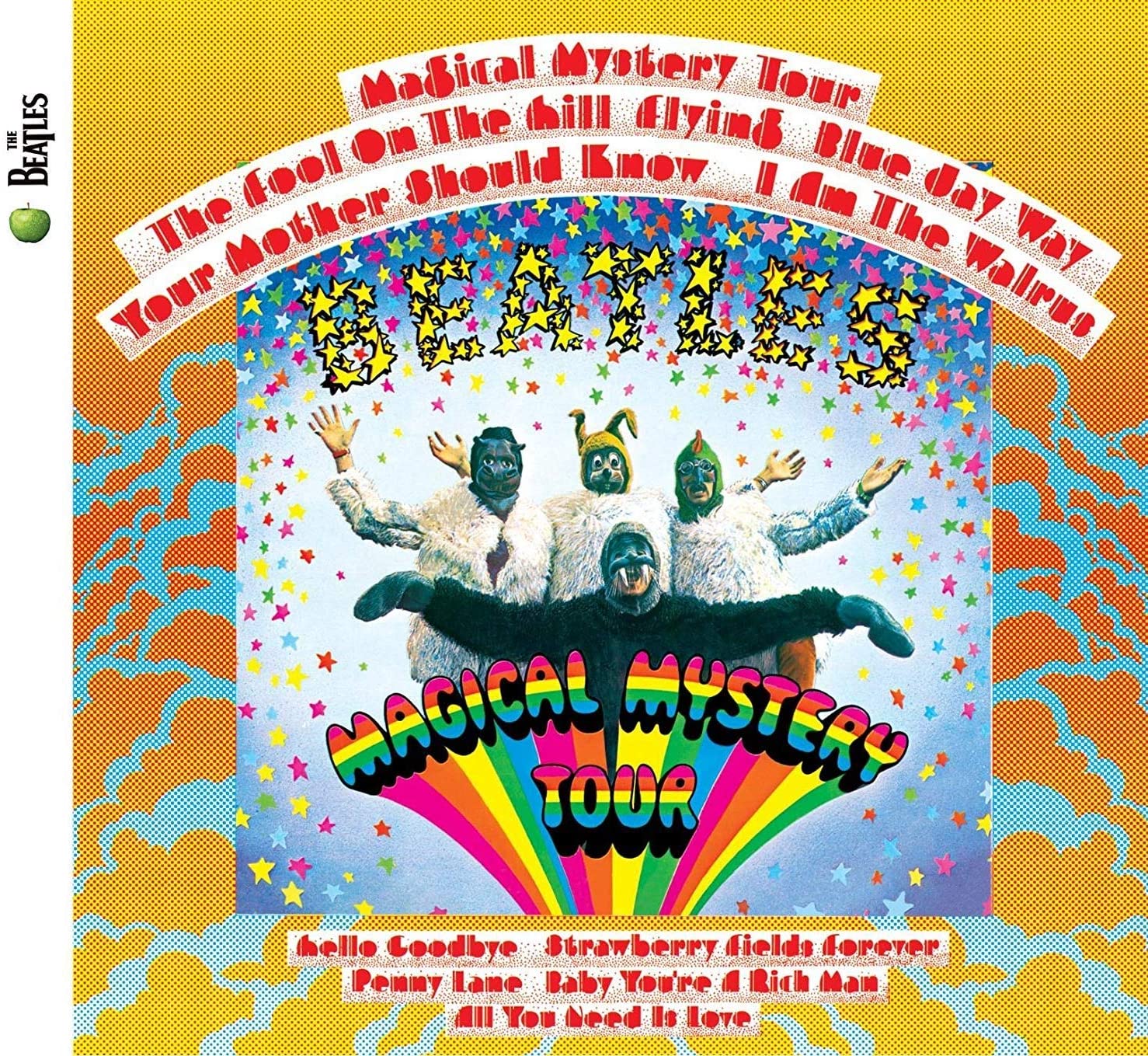
9 Magical Mystery Tour

Magical Mystery Tour
Not a full studio album as such but a compilation of a double ep soundtrack to a made-for-TV film plus some singles. It might be a bit of a mess thematically (as is the film itself, and that’s putting it mildly) but that’s hardly a rare trait in the Beatles album canon and it does contain some of The Beatles best-known songs.  The original British ep release not only included the rousing title track (a far better signature tune for a concept than St. Pepper’s) but ‘The Fool On The Hill’ one of McCartney’s greatest and most unusual compositions, ‘I Am The Walrus’, Lennon’s most successful stab at musical and lyrical surrealism, and Harrison’s remarkable, woozy and weird ‘Blue Jay Way’ (is there anything in pop or rock that sounds quite like it?).

The collection of non-album A and B sides that make up the rest of the album is almost ridiculous in terms of its quality. ‘Hello, Goodbye’, ‘Strawberry Fields Forever’, ‘Penny Lane’ and ‘All You Need Is Love’ are of course among the cream of the Beatles crop; even ‘Baby, You’re A Rich Man’, the B-side of ‘All You Need Is Love’ is a cracker.

Because it’s status as an album is questionable and having all those non-album singles on it is sort of ‘cheating’ in the context of the band’s other releases which lack that advantage, it appears lower down on this list than it might do.  A great listen, especially for those whose favourite Beatles album would be ‘The Best of The Beatles’.

Beatles Handbook rating: 4 stars

Essential tracks
The Fool On The Hill
I Am The Walrus
Blue Jay Way
Hello, Goodbye
Strawberry Fields Forever
Penny Lane
All You Need Is Love

Buy this album: Magical Mystery Tour 

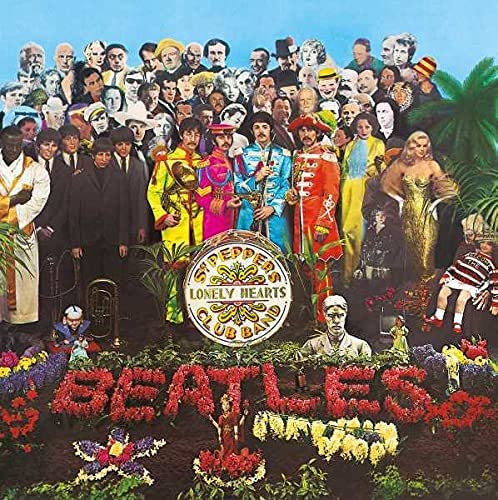
10 Sgt. Pepper’s Lonely Hearts Club Band

Sgt Peppers Lonely Hearts Club Band
The first Beatles album I bought as a kid, aged 11. I never really liked it and now, more than four decades years later, I still don’t. It sounds to me like a band losing their way; the Sgt Pepper’s conceit merely a way of bringing some sort of cohesion to a very disparate group of songs written by musicians with one eye on the exit door.  You can either view the juxtaposition of ‘Within You Without You’ and ‘When I’m Sixty Four’ as audacious and daring or simply desperate. ‘Lucy In The Sky’ has aged badly into try-hard psychedelia; ‘Fixing a Hole’ is uninspired, lumbering and mundane, ‘She’s Leaving Home’ is a re-tread of the vastly superior ‘Eleanor Rigby’ and ‘Being For The Benefit of Mr. Kite!’ is much less clever and much less listenable than Lennon probably thought it was.  ‘A Day In Life”s haunting refrain is swamped by over production and the unwelcome intrusion of McCartney’s ‘middle eight’. It’s a striking, innovative piece but I’m not sure I’d ever want to listen to it for fun. It’s another album that would make a great EP with ‘With A Little Help From My Friends’ and Ringo’s touchingly performed vocal providing the lead track.

Beatles Handbook rating: 3 stars 

Essential tracks
With A Little Help From My Friends
Getting Better
Lovely Rita
Good Morning Good Morning

Buy this album: Sgt. Pepper’s Lonely Hearts Club Band


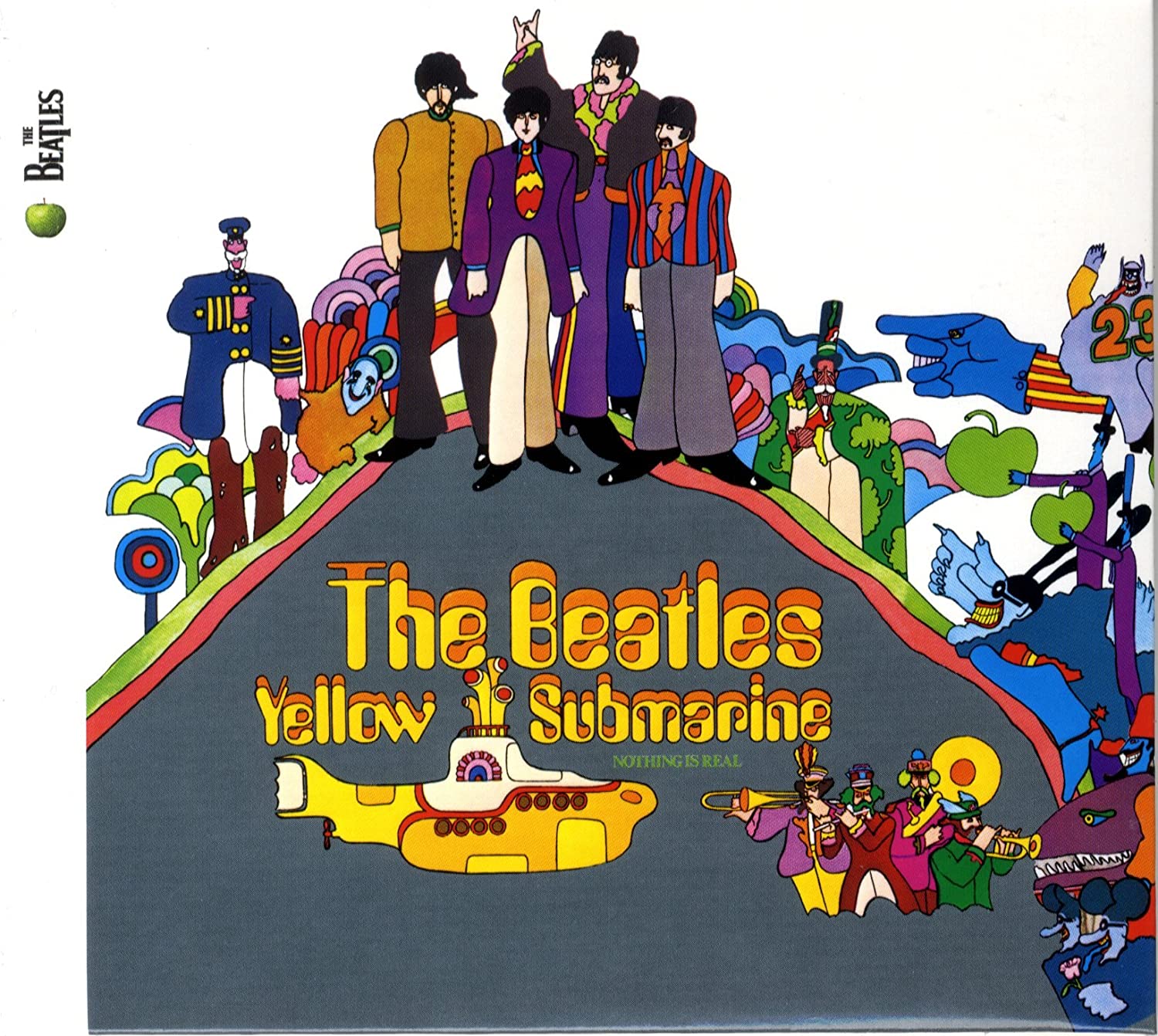
11 Yellow Submarine

Yellow Submarine

A curio in The Beatles album canon. The soundtrack to the animated film contains only four previously unreleased songs, the rest of the running time made up from the title track, which previously appeared on Revolver,  ‘All You Need Is Love’ which was a single and also collected on Magical Mystery Tour, and George Martin’s instrumental orchestral music for the film, none of which will be troubling us here. Unusually, Harrison gets two out of the four new cuts and both are very decent examples of late period Beatles. The inventive and unusual ‘Only A Northern Song’ is built around a loping bassline and random-sounding soundscape of squawling trumpets and backwards tape loops that is much easier on the ear than that description might sound. ‘It’s All Too Much’ is a medium paced stomper with a droning organ riff and busy percussion track supporting a lilting verse melody and catchy chorus hook that all adds up to a distinctive and enjoyable addition to the bands catalogue. ‘Hey Bulldog’s driving piano riff underpins a snarling, menacing Lennon vocal to great effect, but McCartney’s throwaway knees up ‘All Together Now’ irritates rather than amuses. One for Beatles collectors rather than the general listener.

Beatles Handbook rating
3 Stars

Essential tracks
Northern Song
Hey Bulldog
It’s All Too Much

Buy this album: Yellow Submarine

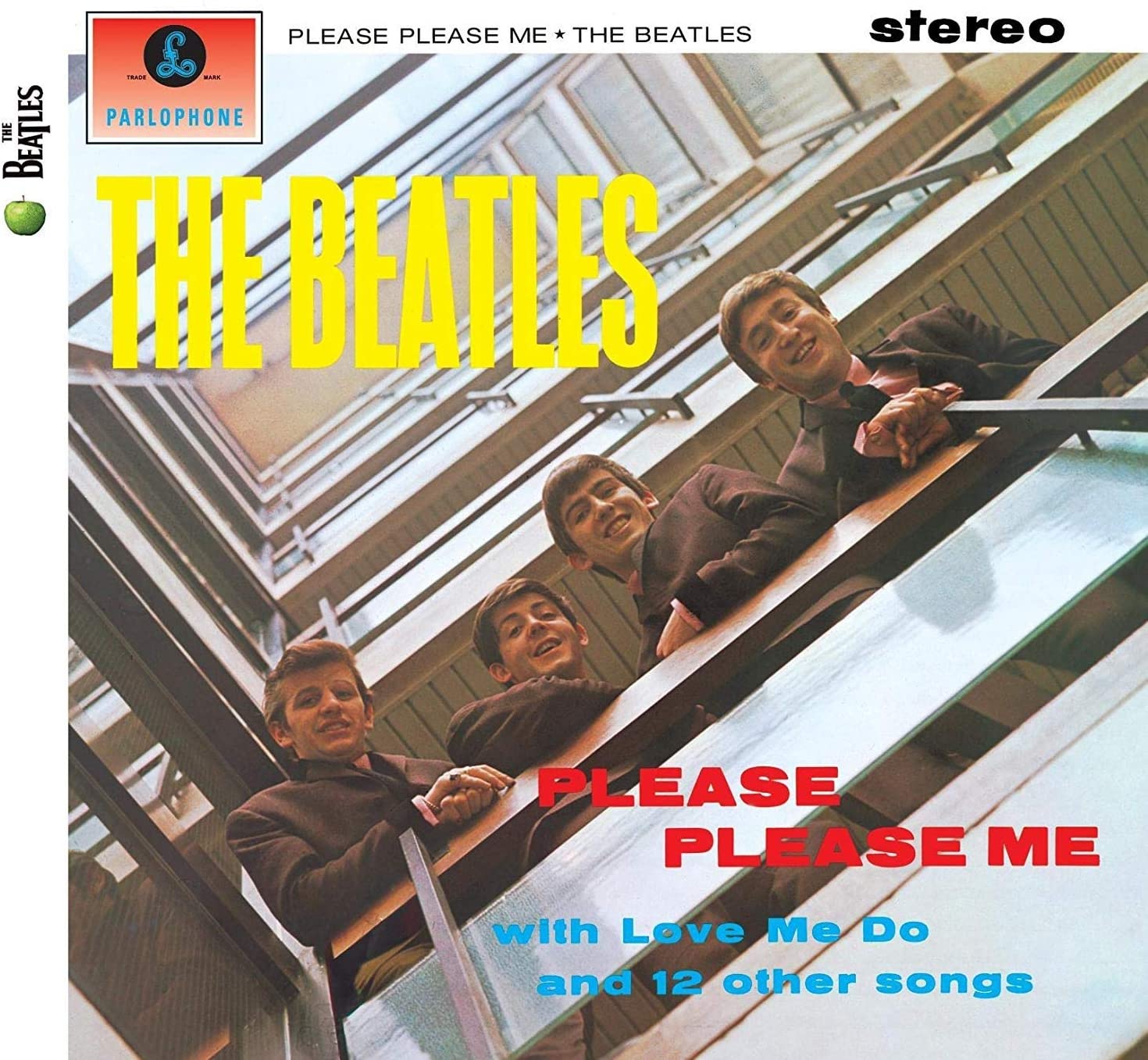
12 Please Please Me

Please Please Me

Released shortly after their return from their extended show band stint in Hamburg, Please Please Me sounds like a historical recording from an ancient civilisation. That the album sounds underwhelming now should come as no surprise; after all, The Beatles had been so busy performing for eight hours a day that they hadn’t quite got around to creating modern pop music.
 
Instead, we get a rather underpowered impersonation of The Beatles’ rock’n’roll heroes (‘I Saw Her Standing There’ sounds pretty energetic until you play ‘Good Golly Miss Molly’ immediately after and Little Richard really blows your hair back) along with some pretty schlocky and sappy love songs.  The title track hints at the greatness to come, as does Lennon’s  plaintive harmonica refrain on ‘There’s A Place’ and the song’s touchingly introspective lyrics. Ringo’s forceful, driving vocal on ‘Boys’ is another highlight.
 
For those that lived through the era, it’s no doubt an essential album and that has to be respected, but if you missed out on those heady days this is a record you can probably live without.


Beatles Handbook rating
2  Stars

Essential tracks
Please Please Me
Do You Want To Know A Secret
Baby It’s You
Boys
There’s A Place

Buy this album: Please Please Me


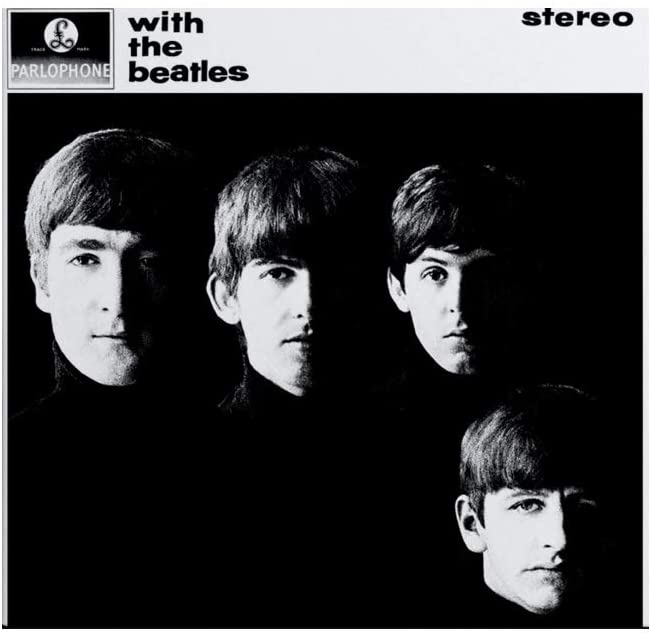
13 With The Beatles

With The Beatles
Released eight months after Please Please Me, the band’s second album sticks pretty much to the debut’s formula with again, eight originals and six covers including Chuck Berry’s ‘Roll Over Beethoven’. It’s a similar mix of rockers and sappy love songs but this time there’s a high quotient of original top pop tunes including the urgent opening track ‘It Won’t Be Long’, the timeless classic ‘All My Loving’ and Harrison’s sombre and relatively overlooked ‘Don’t Bother Me’. But as an album, it still sounds too much like it’s based around a got-to-please-them-all Hamburg set list.

Beatles Handbook rating
2 Star

Essential tracks
It Won’t Be Long 
All My Loving
Not a Second Time
Don’t Bother Me

Buy this album: With The Beatles 

The Essential Beatles Playlist

I Listened to all The Beatles albums in order and these are the tracks I liked